

Why Streetsville is one of Mississauga’s most charming neighbourhoods
A village that a city grew around, two hundred years of yellow brick, and the river four minutes off the main street.
There is a moment, walking south down Queen Street, when you stop registering that you are in Mississauga. The buildings drop to two storeys. The brick turns yellow at the corners. Somebody has put chairs out. It takes a minute to work out what is different, and then it lands: the street was built for people who arrived on foot, and it still behaves that way.
Streetsville calls itself the village in the city. The Business Improvement Area uses the phrase as its own strapline, and Tourism Mississauga uses it too. Nobody seems to know who said it first — we looked, and found no origin for it anywhere — but it has stuck because it is accurate. This is a village that a city grew around rather than over.
It started with a man who financed a survey
Timothy Street was not a miller. He was a tanner and saddler, born in Spencertown, New York, who came to Canada in 1801 and spent more than twenty years near Niagara before he had anything to do with the river that now runs past this street.
In 1818 he and the surveyor Richard Bristol applied to survey the northern part of Toronto Township. Bristol did the fieldwork. Street paid for it. When the work was done he was compensated in land — more than 4,500 acres across what is now Peel and Halton, which is the sort of payment that tells you how much surveying mattered and how little cash there was.
The surveyed land opened for settlement in April 1819. Street bought two hundred acres from William Lindsay in December 1822 and started building the things a settlement needs in the order it needs them: a grist mill first, a sawmill a year or so later, and by 1825 a tannery, a distillery and a clothing mill. John Barnhart had already set up a trading post and general store in 1821 — the Montreal House, which still stands at 210 Queen Street South.
The village got its name in 1829, when the first post office opened. By 1837 there were five hundred people here and it was the largest village in the Home District. Growth then stalled for four decades, for a reason that will be familiar to anyone who has watched a transit line get delayed: the railway did not arrive until 1879.
Streetsville became a town in 1962, when the population passed five thousand. Twelve years later, in 1974, it was amalgamated with the towns of Mississauga and Port Credit to form the City of Mississauga. People here still talk about that.
The buildings are the reason it feels different
Most of what makes Queen Street South feel like another century is not atmosphere. It is masonry, and a good deal of it is protected under the Ontario Heritage Act.
Orange Hall at 47 Queen Street South went up in 1855 — Classical Revival, with a heavy Grecian cornice and yellow-brick detailing, built by William Graydon and his son John on land donated by Henry Rutledge. Graydon House at number 62 is John Graydon’s own, from around 1865, Italianate with an arched entrance and ornamental bargeboard. Graydon was an Irish immigrant master builder who became Reeve and a Justice of the Peace, built the Methodist Church in 1875 and worked on the Credit Valley Railway. Several of his buildings are still standing within a few minutes’ walk of each other, which is an unusual thing for a nineteenth-century builder in Ontario.
The Franklin House at 263–265 Queen Street South dates from about 1850 and ran as a hotel from 1877 to 1910. Look up at the frieze of yellow-brick crosses; locally it is held to be Graydon’s signature.
Streetsville Village Hall at 280 Queen Street South is board-and-batten, built around 1860 by two Scottish brothers, Matthew and William Cunningham, as a tinsmith’s shop. Their family sold it in 1902 to found Streetsville’s first free public library — notably without a Carnegie grant, which almost every other early Ontario library depended on. The Streetsville Lawn Bowling Club, founded in 1890, is believed to be one of the oldest in Canada; it has played on the green beside the hall since the Cunningham family donated the land in 1904.
And then there is Odd Fellows’ Hall at 271 Queen Street South, from 1875, with a public assembly hall on the ground floor and a lavish meeting room above it. The Farmers’ and Mechanics’ Institute ran a library from it. The Odd Fellows sold up in 1972 and the building then sat empty for more than two decades — a fact worth holding onto, because it complicates the postcard. Heritage masonry restoration was reported in 2024, and it is now occupied again.
And it is now formally protected as a district, not just building by building. On 4 December 2024 Mississauga City Council designated Streetsville a Heritage Conservation District — the city’s third, after Meadowvale Village and Old Port Credit Village — under by-laws 0234-2024 and 0235-2024. The village core had already been identified as a Cultural Heritage Landscape through the City’s landscape project, completed in 2022.
The river is closer than you think
The historic village sits on the west bank of the Credit. If you have only ever driven through, this is the thing most likely to surprise you on foot: the David J. Culham Trail, eighteen kilometres of it, begins in Erindale Park at Dundas Street West and follows the river north — and rather than skirting Streetsville, it winds through the village itself. You can be on a main street with parked cars and be beside moving water four minutes later.
Streetsville Memorial Park on Church Street is thirty acres that the Bread and Honey Festival describes, fairly, as a natural amphitheatre on the river. Streetsville GO station is on the Milton line, which means the village is reachable without a car, although Milton-line service is weekday-peak-oriented and worth checking before you plan an evening around it.
What actually happens here
The Streetsville Founders’ Bread & Honey Festival is the big one. It was established in 1973 through the Streetsville Town Promotion Committee and incorporated the following year with Sam McCallion as its charter president. The name is not whimsy: Timothy Street built the area’s first flour mill, Kraft Canada and ADM Milling later had mills locally, and there were enough small apiaries around to make honey a fair second half of the title. Attendees still get bread baked by the milling companies and coated with local honey.
It began as a single Saturday, added Sunday programming in 1989 and became a full weekend in 1990. The City of Mississauga calls it the largest and longest-running festival in Mississauga; Tourism Mississauga calls it one of Ontario’s largest and longest-running. Neither publishes an attendance figure, and nor will we. The 2026 edition — its fifty-fourth — ran from 5 to 7 June at Memorial Park.
The First Friday Market is the one to know about if you want the village at its best with the least planning. It runs at Streetsville Village Square, 7 Main Street, on the first Friday of the month through the summer, five until nine in the evening, free and open to everyone: artisans, small-batch producers, farmers, food vendors, music. It is run by the City in partnership with the Village of Streetsville.
Christmas in the Village takes over the square and Queen Street South itself in late November — artisan vendors, maple taffy, horse-drawn carriage rides, photographs with Santa, and road closures to go with it. There is also a Canada Day StreetFest, and the BIA runs historic walking tours on Wednesdays.
One thing we will not tell you is that the Streetsville Santa Claus Parade is on, because we cannot find evidence that it has run here since 2019. It was cancelled by the BIA in 2017 in favour of a festival format, ran again in 2019, was called off in 2020 and 2021, and Mississauga’s Santa Claus Parade now takes place downtown at Celebration Square. If it comes back to Queen Street we will be delighted, and we will say so.
Three hundred businesses, and a real high street
The BIA — formed in 1979 by local business owners — describes Streetsville as home to over three hundred shops, restaurants and services, and claims the largest number of historic buildings in the city. Those are the BIA’s own figures rather than an audited count, but walk the street and neither is hard to believe.
What no source will tell you is the ratio of independents to chains, so we will not invent one. What we can tell you from working here is that the mix on this stretch is genuinely unusual for the GTA: a hardware shop, a butcher, two or three bakeries, restaurants that have been under the same ownership long enough to have regulars, and a growing number of cafés.
It is not uniformly polished. Vacancies happen, and the Odd Fellows’ Hall standing empty for twenty years is not a small thing. But it is a working high street rather than a reconstruction of one, and the difference shows.
How to spend an afternoon here
Start at the north end of Queen Street South and walk down. Look up rather than ahead — the ground floors have been modernised, and everything interesting is above the shopfronts. Cut east toward the river when you reach Church Street and pick up the Culham Trail for twenty minutes. Come back for something to drink.
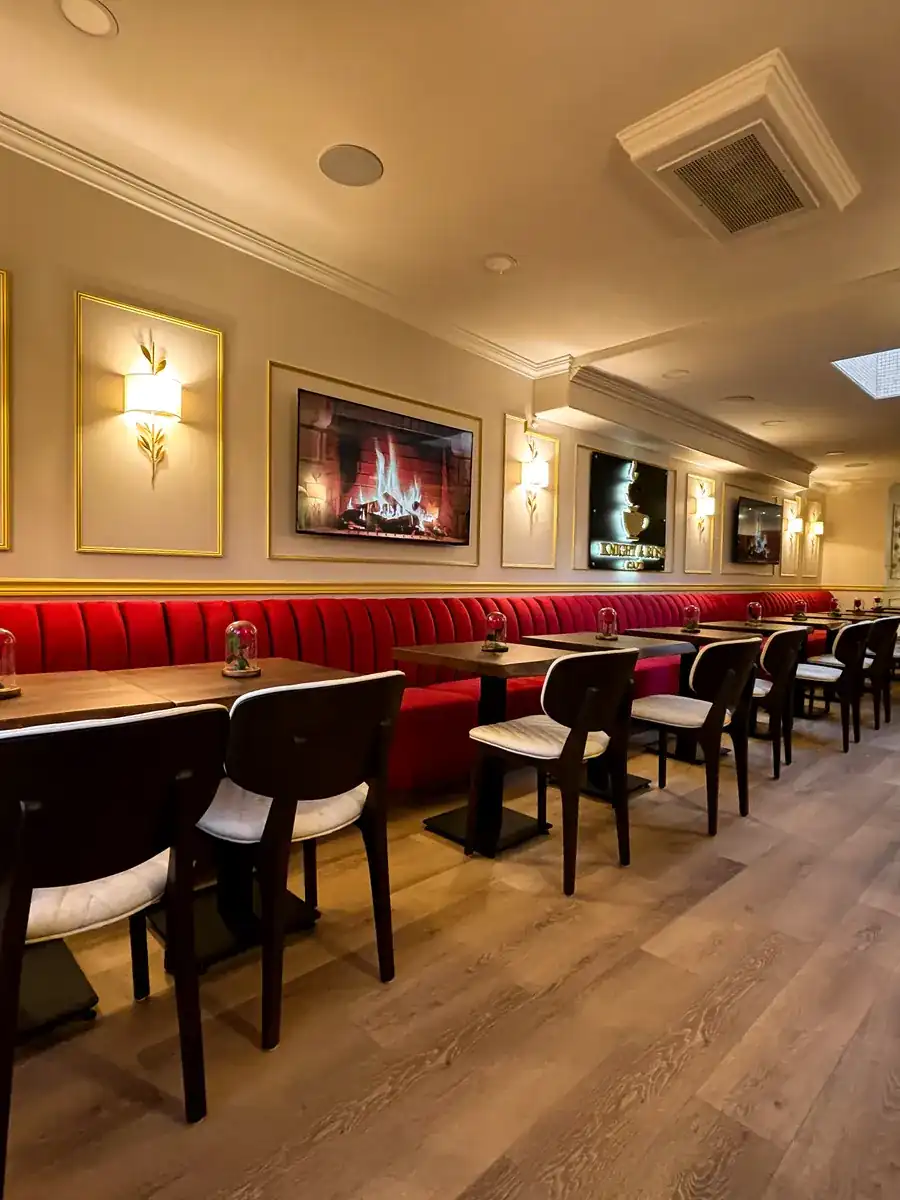
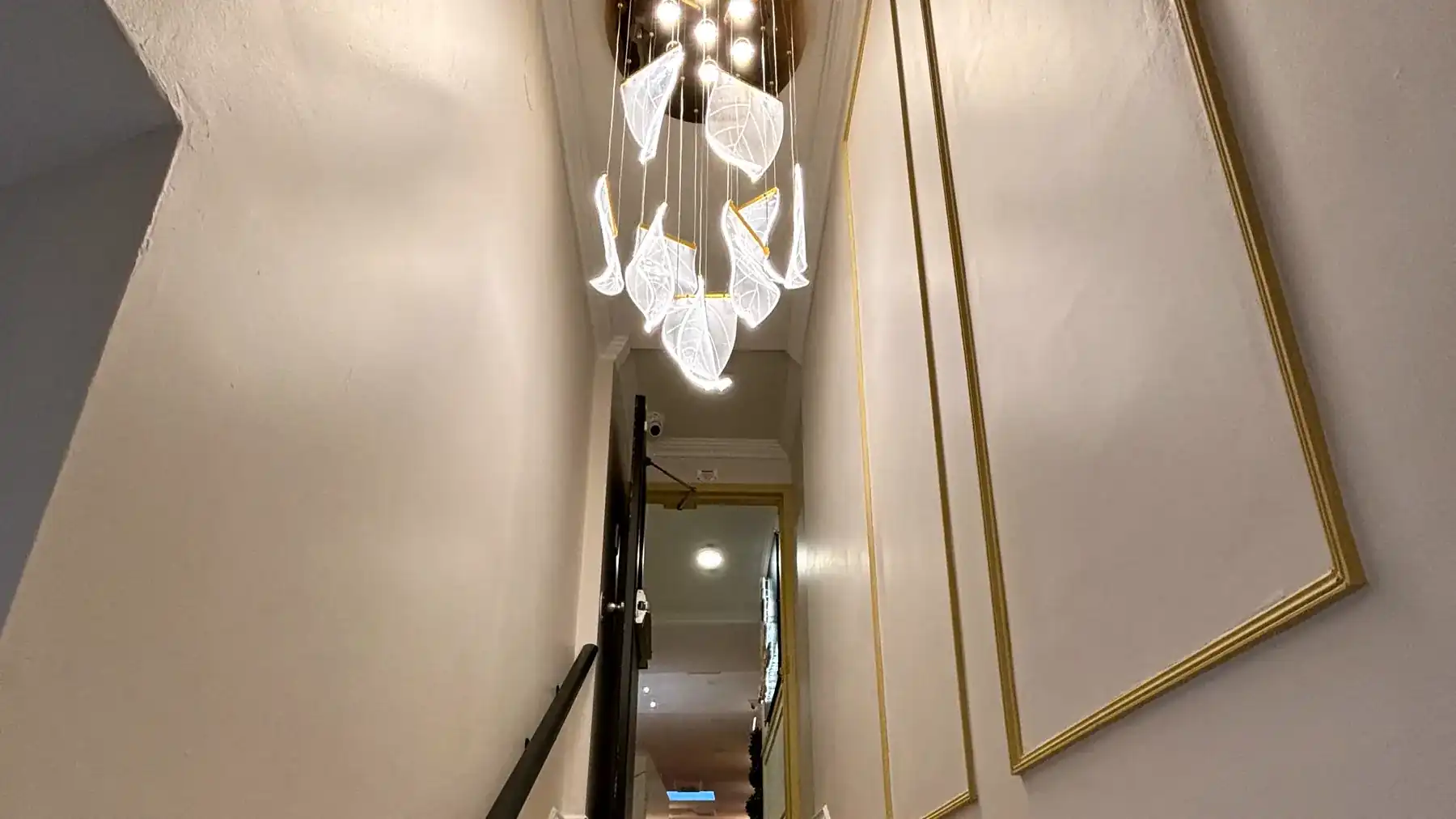
We are at 236 Queen Street South, on the second floor, and we are open until midnight, which means Streetsville has somewhere to go after the shops have shut. That is a relatively recent thing here, and it is the part of this we are proudest of. If you want the village at its quietest and best, come on a weekday afternoon in autumn, sit by a window, and give it an hour.
Read next: where to go for coffee
in Streetsville · the room after eight · how to find us
Written by the team at Knight & Rose Café, 236 Queen Street South, Streetsville, Mississauga.